Beyond Memberships: Retail, Partnerships, and Profit Drivers for Gyms

Published
· Updated

TL;DR
Gym revenue ideas that actually move the needle — semi-private training, retail, partnerships, events, and challenges. Real margins, real numbers, founder-tested.
Memberships are the foundation of every gym, but they're rarely the ceiling. The gyms that build something durable — the ones that survive year three, hire a second coach, pay the owner an actual salary — almost always have two or three revenue lines stacked on top of the recurring membership base.
Look at the numbers. Most independent gyms run a 4,000–8,000/month profit on memberships alone, even with 100+ members. That's not a business; that's a job with rent. The owners who break out of that band do it by adding $3,000–$10,000/month in non-membership revenue from things their members already want to buy from someone — they just want to buy it from you instead.
Roughly 90% of small gyms that struggle financially struggle for the same reason: they only sell one thing. This chapter is the menu of the other things you can sell, what they actually pay, and how to add them without confusing your members or burning out your coaches. (For the broader playbook this chapter sits inside, start with How to Start a Gym.)
The 5 Profit Drivers Beyond Membership
If you only have five minutes, here's the entire chapter at a glance:
The right mix depends on your model and your members. A 120-member CrossFit box looks very different from a 60-member personal training studio. But almost every gym should be running at least three of these five within 18 months of opening.
1. Semi-Private and Personal Training
Personal training is the highest-margin offering in your building. A coach making $40/hour delivers a $90 PT session — that's a 55%+ gross margin before you've factored in that the gym already exists. Stack two clients into a semi-private session at $60 each and the math gets ridiculous: $120 in revenue against the same $40 coach cost, for an 65–70% margin.
Most group-training gym owners leave PT revenue on the table because they think of themselves as "a class gym, not a PT gym." That framing costs you. The reality:
- 15–25% of your group members would buy 1–2 PT sessions per month if you offered it cleanly. They want help with the snatch, the pull-up, the back tweak, the deload week.
- Semi-private (2–4 people, programmed individually) is the sweet spot. It's profitable for you, affordable for the member, and produces better outcomes than a 12-person class.
- PT is also your best on-ramp. Selling a 4-pack of PT sessions to a brand-new member before their first class buys them a relationship, technique, and a story they'll tell their friends.
Pricing rules of thumb:
- 1-on-1 PT: $80–$150 per session, sold in 10-packs at a small discount (~10%).
- Semi-private (2–4 people): $40–$70 per person per session, sold as 8 or 12-week blocks.
- Hybrid bundle: Group membership + 2 PT sessions/month at a packaged price. The single most underpriced product in most gyms.
Schedule PT into the gaps in your group calendar — typically 6–9am, 11am–4pm, and after 7pm. Use software that lets members book PT slots without texting a coach. A clean booking flow is what turns "I should do PT" into PT.
For pricing PT against your group offer without cannibalizing it, see How to Price Gym Memberships. For the sales conversation that turns a group member into a PT client, see How to Sell Gym Memberships — the same framework applies.
2. Retail (Apparel, Supplements, Recovery)
Retail is the most over-promised and under-delivered revenue line in the gym world. Done right, a retail program adds $1,000–$3,500/month in revenue at 40–55% gross margin. Done wrong, it ties up $8,000 in inventory that sits on a shelf for two years.
What works:
- Branded apparel — print-on-demand or small batch. A logo tee at a $14 cost selling for $30 is a $16 margin all day. Print-on-demand (Bonfire, Printful, local screenprinter) eliminates inventory risk. Drop new designs every 8–10 weeks; a member who already owns three of your shirts is your highest-LTV member.
- A short, curated supplement shelf. Pick 3–5 SKUs you actually use and believe in: a protein, a creatine, an electrolyte, maybe a pre-workout. Order at wholesale (typically 30–45% margin), price 10–15% below Amazon, and tell members why this is the one you stock.
- Recovery/equipment basics. Lacrosse balls, voodoo bands, jump ropes, lifting straps, knee sleeves. Low SKU count, evergreen demand, 50%+ margin. The "I forgot my X" impulse buy is real.
What doesn't:
- Stocking 30 colors and sizes of every shirt. You're a gym, not a Lululemon. One or two colors, S–XXL, done.
- Generic supplements you don't take yourself. Members can smell this. They'll buy from Amazon every time.
- MLM supplement deals. Don't. The margin looks good on paper, the trust cost is real, and you'll lose members the moment they figure out they're paying retail for something with a $4 cost basis.
Treat retail as a service to members, not a profit center you're trying to hit a number on. The math works at modest volume. Push too hard and you start making decisions that hurt your community.
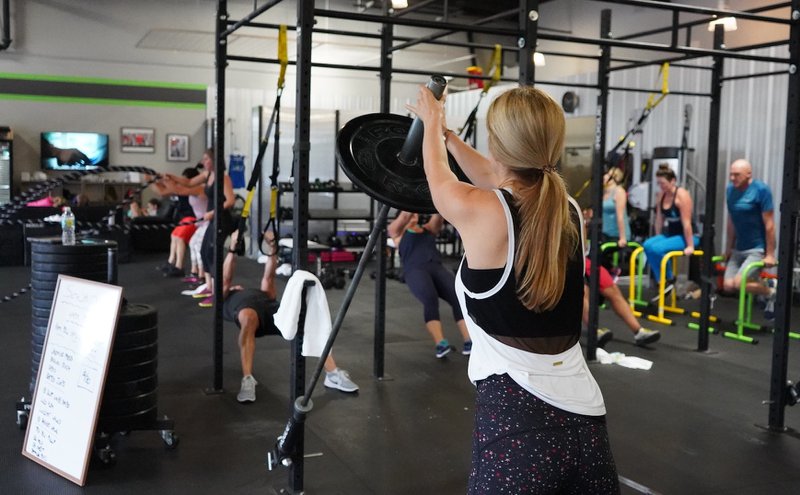
3. Specialty Programs and Challenges
This is the highest-leverage revenue line most gyms ignore. A specialty program is a time-bound, outcome-promised program your members pay extra for on top of their membership, and it does three things at once: generates non-membership revenue, deepens engagement, and gives lapsed members a reason to come back.
The formats that work:
- 6-week nutrition challenge. $199–$399 per participant. Habit tracking, weekly check-ins, before/after photos, a private group chat. Usually runs 2–3 times per year. 30–50% of your member base will participate at least once.
- 6-week transformation. Higher-ticket ($400–$700), more hands-on. Body comp, programming overlay, weekly 1:1 check-in. Lower volume, much higher margin.
- Weekend skill clinic (Olympic lifting, gymnastics, kettlebell, mobility). $79–$149 per person, runs 3 hours on a Saturday. Easy to fill, fun for the coach, perfect introduction for a friend who isn't ready for a full membership.
- Run club, hike club, "in-season" sport-specific block. Often free for members, paid for non-members at $40–$80/month. A run club is also a marketing channel disguised as a program.
The trick with challenges: don't run them more than 3x per year and don't water down the result. A challenge with 80% completion and visible outcomes drives 6–12 months of word-of-mouth. A challenge that fizzled because the coach lost interest in week three costs you trust.
4. Partnerships (Done Right vs. Done Wrong)
Partnerships are where founders most often confuse activity for results. You'll get pitched constantly — a chiropractor wants to "exchange referrals," a supplement rep wants shelf space, a juice bar wants to "cross-promote." Most of these go nowhere because nobody actually does the work after the meeting.
The partnerships that consistently produce revenue:
- Chiropractors, PTs, and sports med doctors. Their patients need to move; your members get hurt. Done well: a real intake hand-off in both directions, clear communication about what each side does, a quarterly coffee. Done badly: business cards on the front desk that nobody hands out.
- Registered dietitians / nutritionists. Either you employ a contractor (rev share on sessions, often 60/40 to the RD) or you refer members out. Both work. Don't try to coach nutrition yourself if you're not qualified — it's an insurance and outcome risk.
- Coffee shops, juice bars, athleisure. Co-branded loyalty. Your members get 10% off, they put your flier at the register. Low-effort, low-revenue, high-community-feel. Worth doing.
- Local employers (corporate wellness). A company pays a flat fee for their employees to access your gym, or subsidizes membership. $500–$3,000/month per company is realistic. Slower to close but very sticky.
Revenue share vs. referral. This is where most founders get burned. Revenue-share deals (you pay the chiropractor 20% of every member they send) sound clean but they create weird incentives — the partner starts pushing your gym to people who shouldn't be there. Simple referral relationships, where each side keeps 100% of their own revenue and just sends good-fit clients across, almost always outperform formal rev-share over a 2-year window. Trust beats a spreadsheet.
The one exception: in-house contractors (a massage therapist or RD who rents your space). Set a clean rent or rev-share split, get it in writing, and treat it like a sublease.

5. Events and Workshops
Events do something the rest of your offerings can't: they pull non-members into your space and give existing members a reason to bring a friend. Most owners under-program their event calendar because events are episodic and harder to systematize than a class. Worth fixing.
What runs well:
- In-house seminars. Goal-setting at New Year, a nutrition seminar before holidays, a sleep/recovery workshop in spring. Free for members, $20–$40 for non-members. Low revenue, high retention.
- Charity throwdowns. A 4-person team competition, $40–$80/team, proceeds to a local cause. 80–150 athletes, hosted on a Saturday, sponsored by 2–3 local businesses for $250–$500 each. These can clear $3,000–$8,000 in a single day and produce 30+ qualified leads.
- Hosting external coaches. Bring in a known coach (Olympic lifting, gymnastics, mobility) for a weekend seminar. Typical split: 60/40 or 70/30 to the coach, you provide space + marketing + 25–40 paying attendees. $79–$199 per ticket.
- Member appreciation events. Not revenue, but retention. Once a quarter. Cookout, ugly sweater WOD, kids' day. The cost shows up in lower churn, which is real money.
How to Introduce a New Revenue Line Without Alienating Members
Adding a new offering is a delicate moment. Members signed up for one thing; you're now selling them another. Mishandled, it feels like a bait-and-switch. Handled well, it feels like a gift.
A few rules that have held up across thousands of gyms:
- Frame it as a benefit before a price tag. "We're adding a nutrition program because too many of you have asked us to help with the food side." Not: "New profit center launching Monday."
- Sell it to your most engaged members first. A soft launch to your top 20 advocates, with a small founders' discount, gives you proof and testimonials before you blast the whole list.
- Don't bundle it into the base membership the first time you launch it. People don't value what they didn't pay for. Price it standalone, see the demand, then decide if it eventually becomes part of a higher tier.
- Use one channel at a time. A members-only email, then a referral push, then social. Don't fire all three the same day or it reads as marketing, not service.
- Train your coaches before you train your members. If a coach can't explain the new program in two sentences, your members can't either.
For the surrounding playbook on launching anything to your member base, see The Gym Marketing Plan. For protecting the relationship side while you grow, see Member Experience and Community.
Real-World Numbers — Rough P&L Impact
Here's a representative micro-gym at 130 members, $200 ARPM, $26,000 in monthly membership revenue. Realistic add-ons over a 12–18 month build-out:
Roughly $6,000–$7,000 of that is incremental gross profit. For most independent gyms that's the difference between "the owner takes a $48,000 salary" and "the owner takes $120,000 plus reinvests." It is, unironically, the entire game.
Two cautions on these numbers. First, they assume you actually run the programs — the calendar, the emails, the coaching hours. None of this is passive. Second, watch your unit economics on each line, not just the totals. A retail line that produces $1,500 in revenue at 45% margin needs to be netting against your time and inventory cost. Track the right metrics from day one — see Gym Metrics That Matter — or you'll mistake busy for profitable.
What to Skip
A short, opinionated list of revenue ideas that look great on a sales call and lousy on a P&L:
- Over-promised programs. A "guaranteed 20 lbs in 8 weeks" challenge sells well once and destroys your reputation when it doesn't deliver. Promise effort, structure, accountability — not numbers you can't control.
- Heavy stocked retail. Buying $5,000 of inventory in 12 SKUs across 4 sizes and 3 colors is a great way to have $4,000 of dead stock by Q2. Print-on-demand and small reorders are the answer until you've proven a SKU's velocity.
- MLM supplement deals. Whatever they're paying you up front isn't worth the trust hit when a member Googles the brand.
- Renting your space to anyone with cash. A yoga teacher renting Saturday mornings might be fine. A bootcamp using your equipment in a way that competes with your group classes is not. Read the agreement before you cash the check.
- Affiliate links to gear you don't actually use. Members can tell.
- Drop-in tourists as a revenue strategy. Drop-ins are a nice extra and a community gesture. They are not a P&L line.
The pattern across all of these: short-term cash, long-term trust loss. Your members' trust is your most expensive-to-rebuild asset. Don't sell it for a 30% commission.
FAQ
What's the most profitable add-on revenue stream for a gym? Semi-private and personal training, by a wide margin. The gross margin is 60–80% and the revenue per member-hour is several times higher than group classes. Almost every gym should offer some form of PT, even if it's just an on-ramp package for new members.
How much can a gym realistically make from retail? $1,000–$3,500/month at 40–55% gross margin is realistic for an independent gym at 100–200 members, assuming a curated, low-SKU approach with print-on-demand apparel and a small supplement shelf. Stocking heavy inventory rarely pays back.
Should I do revenue share with a chiropractor or PT? Usually no. Simple, mutual referral relationships almost always outperform formal revenue share over a 1–2 year window because they create cleaner incentives. Reserve revenue share for in-house contractors who use your space — like an on-site massage therapist or RD.
How often should I run a challenge or transformation? Two to three times per year. More than that and members stop engaging — it stops feeling special. The goal is high participation, high completion, and visible results. Three excellent challenges a year produce more revenue and word-of-mouth than six mediocre ones.
Can a small gym actually charge for events and workshops? Yes. $79–$149 for a half-day skill clinic is normal, and $40–$80/team for a charity throwdown is standard. The bigger value is often non-revenue: workshops bring in non-members and produce qualified leads at a lower CAC than paid ads.
How do I add a new revenue line without my members feeling nickel-and-dimed? Frame it as solving a problem they've already told you they have, sell it to your most engaged members first, and don't change the price of their existing membership when you do it. Members feel nickel-and-dimed when something they already had quietly gets taken away — not when something new is added.
What's the wrong way to think about gym profit? Trying to engineer a 20% margin out of memberships alone. The membership business at independent-gym scale is structurally a 5–12% margin business after rent, payroll, and software. The 20%+ margin gyms get there by stacking 2–4 of the revenue lines in this chapter on top of a healthy membership base.
The Punchline
Memberships keep the lights on. They don't pay you what you're worth. The gyms that pay their owners well, hire great coaches, and survive long enough to compound their reputation are almost always running three or four revenue lines, not one. Pick the two that fit your model, get them running cleanly, and add the next one in 90 days.
The full opening playbook is at How to Start a Gym. When you're ready to run all of these without the spreadsheet eating your weekends, PushPress handles memberships, PT booking, retail, challenges, and reporting in one place — built for the way independent gym owners actually work.
Resources for Gym Owners
Playbooks, checklists and on-demand webinars — every one built from an interview with an owner who runs the system.
Ready to scale your fitness business?
Try our hassle-free gym management software loved by thousand of successful gym owners.
PushPress is the reason my gym became profitable.
What to Do When a Gym Member Tells You They Have Cancer
A cancer rehab specialist's 3-step plan: what to say, when to refer out, and how to keep them training.

Putting in the Reps: What Changed at PushPress in Q3
280+ fixes and improvements across booking, check-in, and billing, plus what we're focused on next.

Glofox Pricing in 2026: What $99 a Month Actually Gets You
$99 a month gets you a gym that can't take waivers, sell a shirt or collect a lead from its website.
Follow along and build a better gym with us
Get actionable strategies and ideas to help you grow your gym and manage it successfully, in your inbox every week!