How to Actually Tell If Your Gym's Organic Content Is Working

Published

TL;DR
Views and likes measure reach, not intent, so they won't tell you if your content is filling your gym. Watch the signals that actually predict sign-ups: saves, shares, DMs, profile visits, and repeat viewers. The strongest proof happens off-platform, like new members who followed you for months before walking in. Set up simple tracking and fast follow-up so the interest you create doesn't slip away, and judge the body of work over months instead of grading one post.
Most gym owners quit organic content for the same reason: they can't tell if it's doing anything.
You post for a month. A few videos do okay, most don't. Nothing obvious happens. No spike in sign-ups you can point to. So you decide organic doesn't work for your gym and go back to running ads, where at least the dashboard tells you something.
Here's the problem with that. Organic content can be quietly filling your gym while showing you numbers that look like failure.
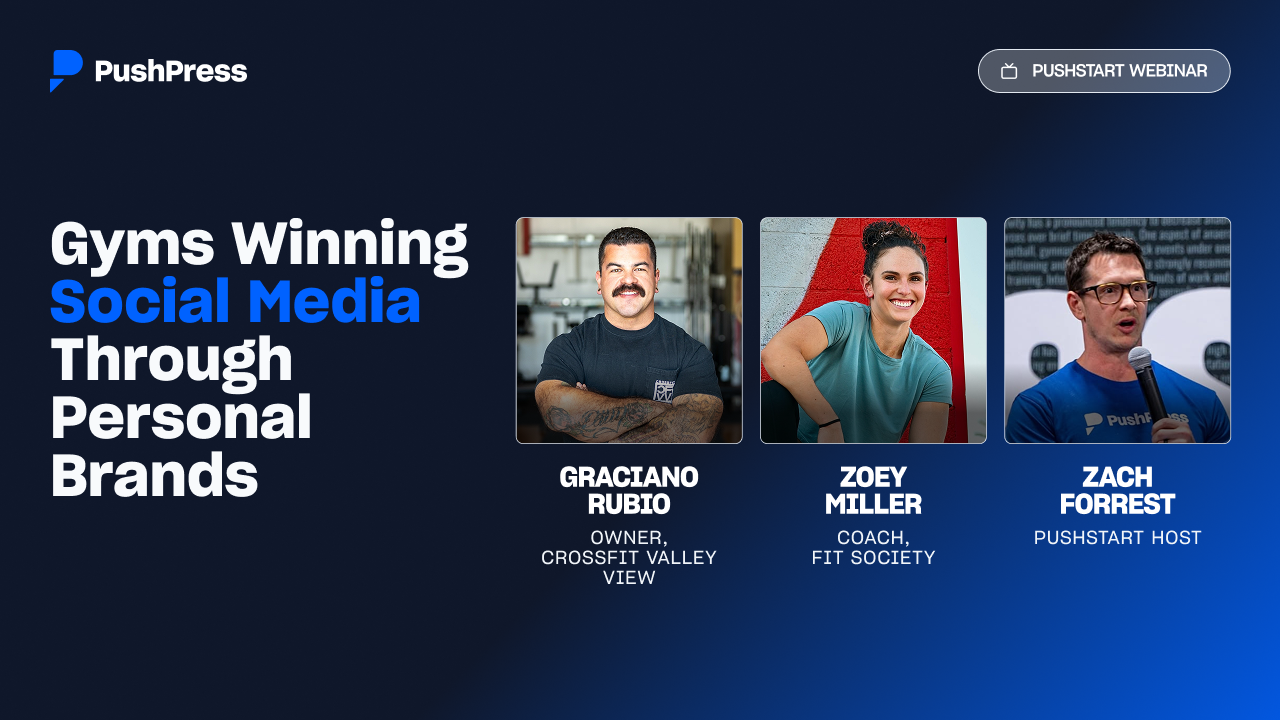
We saw this play out in a recent PushStart webinar with Graciano Rubio, owner of CrossFit ValleyView. He put up a Father's Day video that was one of his lowest-performing posts of the year. Hardly any reach. It also brought two new members through the door inside of 10 days.
If you were judging that video by its view count, you'd have called it a flop and stopped making videos like it. That would have been the wrong call. So let's talk about how to actually read whether your content is working, and how to stop losing the leads it creates.
Views and likes tell you reach, not intent
The first mistake is measuring the wrong thing.
Views, likes, and follower count tell you how many people saw something. They don't tell you whether anyone who saw it is closer to joining your gym. Those are two completely different questions, and only one of them pays your rent.
A video can rack up 50,000 views from people three states away who will never set foot in your gym. Another video can get 800 views, half of them local, and put two people into a no-sweat intro. The second one is working. The first one is entertainment.
If you want a number that actually points toward sign-ups, watch these instead:
- Saves and shares. A save means someone wants to come back to it. A share means it was worth putting their own name behind. Both signal real interest, not a thumb twitch.
- DMs and comments with a question. "Where are you located?" or "Do you do beginners?" is a lead raising its hand.
- Profile visits. People who tap from a post to your profile are checking you out, not just scrolling past.
- Repeat viewers. The same faces watching your stuff over and over are the ones warming up to join.
None of these show up as neatly as a view count. All of them matter more.
The signals that never show up in a dashboard
Here's the part that trips up even owners who track their metrics closely: some of the strongest proof that your content is working happens in person, weeks later, and never touches an analytics screen.
Graciano's tell is the no-sweat intro. Prospects come in, and when he asks about their goals, they repeat things back to him almost word for word from videos and emails he put out. One person signed up days after he posted a video about genetics, then sat in her intro talking about being the least athletic of her siblings. She'd been watching. She just never liked or commented.
He calls these people lurkers, and they're the majority. They follow you silently for months. They read the emails. They watch without engaging. Then one day something lands at the right moment and they walk in already sold, having "seen you 25 times previously," as Graciano put it. You can't tie that sign-up to a single post, because it wasn't a single post. It was the whole body of work building trust over time.
So how do you catch this in the real world? A few habits:
- Ask every new member how they heard about you, and write it down. Patterns show up fast.
- When someone signs up, check whether they already followed you. If they did, your content was part of the reason they came in, even if they never said so.
- Listen for your own words coming back at you during intros and goal reviews. When a prospect echoes your content, that's attribution you'll never get from a chart.
Trust is the thing that actually drives sign-ups, and trust is slow and hard to measure. That's not a reason to ignore organic. It's a reason to measure it in behavior instead of demanding it prove itself one post at a time.
Set up the tracking that closes the loop
While social content can be more subjective, you shouldn’t run your strategy off feelings. Here are some things you can set up to make trends visible and drive viewers to a higher-converting channel.
Start with "how did you hear about us." Add this question everywhere you capture a lead: your intro booking form, your trial signup, your first conversation at the front desk. Write the answers down. You'll start seeing patterns within a month. If three people in a row say "I saw your video about the dad workout," that video is working.
Put clear next steps in your bio. Instagram allows business accounts three bio links. Make the first one a direct action your potential member can take today: book a no-sweat intro, claim a free trial week, sign up for a class. The second and third can support the decision: a blog post that answers the question a new person always has, your website for more context, or a time-sensitive link like an upcoming event. If you need more than three, use a link-in-bio page, but put the action link at the top. In every post, tell people what they'll get if they click, not just "link in bio." "Link in bio to get your first class free."
Reshare posts to your story with a link sticker. The jump from a feed post to a bio to a website is enough friction to lose someone. A story link is one tap. This is also an easy way to give an old post a second life.
Tag your links so you know where traffic comes from. UTM parameters are small pieces of text added to a URL that tell your analytics which platform sent the click. There are two you need: utm_medium is the channel type (for all organic social, that's organic-social), and utm_source is the specific platform (instagram, facebook, youtube). A tagged link looks like this:
yourgymdomain.com/free-trial?utm_medium=organic-social&utm_source=instagram
Most social scheduling tools build these for you automatically and create shortened vanity links for readability.
Use comment automations to catch warm leads in the feed. A tool like ManyChat lets you respond to comments automatically with a DM. You put it in the post: "Comment TRIAL and I'll send you a link to your first free class." When someone comments, they get the link without ever having to leave their feed. This removes friction, but also increases engagement in your comments, which then improves reach. Pick keywords that someone wouldn't say casually, and make sure each automation points to the right post.
Don't send cold traffic straight to a commitment. A first-time viewer who stumbles on your reel isn't ready to book an intro. They're still deciding if they trust you. Mix in other content where you redirect to a resource, a blog post, or a short guide, giving them another chance to learn what you’re about without giving a hard yes. Embed your booking link in the resource, or require them to enter their email to download so you can warm them up through other channels. You're building the relationship before you ask for the decision.
Check your social traffic in analytics. The number of sign-ups directly from organic will appear low, because most more often people will see your post, visit your website a few times, read a couple resources, and then book. Website traffic from social indicates if your posts generated initial interest in your offer. Knowing what pages people landed on, from what platforms, and which posts is useful information.
Your content got them to your website. Now what happens after the click?
Your content's job is to create interest. Something has to catch it.
Here's where most gyms lose. Someone watches for weeks, then finally reaches out. They send a DM, drop a comment, or book a no-sweat intro. Then they wait. A day goes by, then two, before anyone follows up. By then the moment has passed and they've cooled off or walked into the gym down the street.
That follow-up is the job PushPress Grow does. When a lead comes in from your content, Grow follows up automatically, so a warm prospect never sits waiting on a manual reply. Every lead lands in a pipeline you can actually see, and the right message goes out at the right time without you remembering to send it. A missed intro gets a nudge. A new booking gets a hype message. It runs in the background while you coach.
This isn't a replacement for the content. The posting still does the hard part of building trust. Grow just makes sure the interest you worked for doesn't leak out the bottom.
And it shows up in the numbers. Gyms running Grow alongside Core pull in noticeably more leads per month than gyms on Core alone, netting roughly 6 more leads per month, about a 48% lift, per the 2025 cohort analysis. Same content. Fewer leads lost.
What "working" actually looks like
Redefine the scorecard before you decide organic isn't for you.
A single post is the wrong unit of measurement. One video will almost never move your sign-up number on its own, and the ones that do are often the quiet, relatable posts, not the ones that go big. Judge the body of work, not the highlight.
Over a few months, working looks like this: your trust-building signals are trending up, more new members mention seeing you online, prospects show up to intros already half-sold, and you have a follow-up system catching the interest your content creates so none of it leaks out.
That's the honest answer. Organic content isn't a slot machine that pays out per post. It's a trust engine that runs in the background, and the gyms that win with it are the ones who measure it like one.
FAQ
How do I know if my gym's organic content is working?
Don't judge it by views or likes. Watch for saves, shares, DMs, profile visits, and repeat viewers, then track behavioral signals in person: new members who mention seeing you online, or prospects who repeat your content back to you during their no-sweat intro. Trust builds over months, so measure the body of work, not one post.
Why would a low-view video drive sign-ups?
Because reach isn't intent. A video can get huge views from people who will never visit your gym, while a relatable, authentic post reaches the local people who are actually ready to join. One of Graciano Rubio's lowest-view videos brought two new members through the door in 10 days.
How do I track leads that come from social media?
Add a "how did you hear about us" field wherever you capture leads, check whether new members already followed you, and use link-in-bio, UTM tags, and a tool like ManyChat to catch comments and DMs. Then follow up fast, before the interest cools.
Can organic content replace paid ads for my gym?
They're two ways to grow, not an either-or. Ads buy reach. Organic builds trust. The gyms that win usually run both.
Resources for Gym Owners
Playbooks, checklists and on-demand webinars — every one built from an interview with an owner who runs the system.
Ready to scale your fitness business?
Try our hassle-free gym management software loved by thousand of successful gym owners.
PushPress is the reason my gym became profitable.
What to Do When a Gym Member Tells You They Have Cancer
A cancer rehab specialist's 3-step plan: what to say, when to refer out, and how to keep them training.

Putting in the Reps: What Changed at PushPress in Q3
280+ fixes and improvements across booking, check-in, and billing, plus what we're focused on next.

Glofox Pricing in 2026: What $99 a Month Actually Gets You
$99 a month gets you a gym that can't take waivers, sell a shirt or collect a lead from its website.
Follow along and build a better gym with us
Get actionable strategies and ideas to help you grow your gym and manage it successfully, in your inbox every week!