How to Start a Gym: The Complete Step-by-Step Playbook

Published
· Updated
TL;DR
The complete playbook for opening a gym — from validating the idea and budgeting startup costs to pricing, pre-sales, and launch. Built from 10+ years helping micro-gym owners.
Opening a gym is one of the more complicated small businesses you can start. You're not just selling a product — you're building a community, signing a long lease, hiring coaches, learning to sell, learning to lead, and running operations all at once. Most new gym owners don't fail because their workouts aren't good. They fail because nobody warned them about the unsexy parts: the lease clauses, the cash gap before month four, the cost of a payment processor that doesn't reconcile.
This is the playbook we wish every founder had on day one. It's built from a decade of working alongside thousands of independent gym owners — CrossFit boxes, boutique studios, strength gyms, pilates studios, martial arts academies. The mechanics are mostly the same. We'll walk you through nine steps, the real numbers behind each one, and the chapters of our playbook where you can go deeper on every topic.
If you only have five minutes, skip to the 9-step path below.
The 9-Step Path to Opening a Gym
Here's the entire journey at a glance. Each step links to a deeper chapter you can read when you're ready to act on it.
How long does it take? Six to twelve months from "I'm doing this" to opening day is the realistic range — three months minimum if you already have a location lined up.

How Much Does It Cost to Start a Gym?
Most independent gym launches in the US cost between $50,000 and $250,000 all-in, with the bulk of small-format gyms (CrossFit boxes, strength studios, boutique fitness) landing in the $80,000–$150,000 range. Big-box and high-end boutique concepts run $300,000 to $500,000+ once you factor in custom build-outs, premium equipment, and signage.
Three things drive 80% of the variance:
- Build-out and TI (tenant improvements). A second-generation space already zoned for fitness can cost as little as $10,000 to make turn-key. A raw shell needs flooring, electrical, plumbing for showers, HVAC adequate for sweating bodies — that can run $30 to $100 per square foot.
- Equipment. A 3,000-square-foot CrossFit box with quality bumper plates, racks, rowers, and assault bikes runs roughly $25,000–$50,000 if you buy new. Buy used or stagger your purchases and you can cut that in half. (Full spec and shopping order in Gym Equipment & Floorplan: A Practical Guide.)
- Working capital. This is the line everyone underestimates. You need 6+ months of fixed costs (rent, insurance, software, your own salary if you're not eating ramen) sitting in the bank on opening day. For a typical small gym that's $30,000–$60,000.
Your single biggest cost-control lever is pre-selling memberships before you open (we cover this in Step 8). A founder who walks into opening day with 40 paid Founders Club members has fundamentally changed the math.
For a full line-by-line breakdown of where the money goes, see How Much Does It Cost to Start a Gym?. For a startup-cost worksheet you can fill in for your own market, see Market Research for a New Gym.
Step 1: Decide What Kind of Gym You're Opening
Before you sign anything, get specific about what you're building. "A gym" is too vague to make smart decisions about location, equipment, or pricing.
Pick a primary model:
- Group training (CrossFit, F45, bootcamp, strength & conditioning). Class-based, coach-led, programming-driven. Lower equipment cost per member, but coaching quality is everything. Memberships typically $150–$250/month.
- Boutique fitness (yoga, pilates, cycle, barre). Class packs and unlimited memberships. Heavy on aesthetics and instructor experience. Often $180–$300/month or pay-per-class.
- Personal training studio. Sessions sold in packs. Lower foot traffic, higher per-customer revenue. $80–$150 per session is typical.
- Hybrid / open gym. Memberships + classes + PT. More flexibility, but also harder to position.
- Niche specialty (martial arts, climbing, kids gymnastics, semi-private strength). Smaller addressable market but defensible. Pricing varies widely.
The model dictates almost everything downstream — square footage, lease type, equipment list, staffing model, software needs. Don't try to be all of them.
Opening a CrossFit gym specifically? Most of this playbook applies, but the CrossFit affiliate model adds a few wrinkles: the affiliate fee, the programming question (write your own vs. use Mayhem/CompTrain/etc.), and a member base that's more sophisticated about coaching than most. The general framework here still holds — and we size the CrossFit-specific market, including capture rates against existing boxes, in Market Research for a New Gym.

Step 2: Validate the Market
You don't need a 40-page business plan. You need to be able to answer five questions honestly:
- Who is the member I'm serving? (Be specific. "Women 35–55 who want strength training in a non-judgmental environment" is useful. "Anyone who wants to get in shape" is not.)
- How many of those people live or work within a 10-minute drive of my space?
- Who else is serving them? What are those gyms charging? Are they full?
- What's the gap I'm filling — programming, vibe, schedule, price, niche?
- At my pricing, how many members do I need to break even, and is that a realistic capture rate?
That last one is the kill-switch. If your breakeven requires 200 members in a market where the dominant gym has 180 and you'd need to outsell them in year one, the plan needs more work.
Full walkthrough — including the spreadsheet we use to size the market: Market Research for a New Gym.
Step 3: Build the Financial Model
You don't need MBA-level modeling. You need a one-tab spreadsheet that captures four things:
- One-time costs: build-out, equipment, deposits, initial marketing, signage, legal/LLC setup.
- Monthly fixed costs: rent + CAM (common area maintenance), utilities, insurance, software, payroll, your own pay.
- Revenue ramp: month-by-month assumed member count and ARPU (average revenue per user).
- Cash gap: the months between opening and breakeven, multiplied by your monthly burn.
The number you actually care about is cash gap × 1.5. That's the real working capital you need before you sign a lease. Almost every gym that closes within 18 months ran out of cash, not members.
The single best move you can make at this stage is pre-selling. We dedicate Step 8 to it because the difference between launching with $0 in MRR and $8,000 in MRR is the difference between optimism and oxygen. The full mechanics live in the Founders Club pre-sale playbook.

Step 4: Handle the Legal Setup
Six things, in this order:
- Form an entity. An LLC is fine for most owners — limits personal liability, simple tax treatment. If you're raising outside capital, you'll want to look at a corporation. Talk to a small-business attorney; most charge a flat $500–$1,500 to set you up properly.
- Get an EIN. Free, takes ten minutes on the IRS site.
- Pull permits. Zoning use, occupancy permit, business license, sometimes a sign permit. This is the step that most often blows up timelines — start it the day you sign the lease.
- Get insurance. General liability + professional liability + property. Budget $1,500–$3,500/year for a small gym.
- Lock down your waivers and member agreements. Don't use a free template. A gym-specific liability waiver, drafted or reviewed by an attorney, is one of the highest-leverage $500 you'll spend.
- Set up payroll and accounting. Even if it's just you. QuickBooks + Gusto is the standard stack.
The full list, with the gotchas and the contract clauses people miss: The Legal Checklist to Open a Gym.
Step 5: Pick a Location and Sign the Lease
Two separate decisions, both critical, often rushed.
Pick the location based on:
- Your member's commute. Most gym members drive 7–10 minutes max. Map your target persona's likely zip codes and find space inside that radius.
- Visibility. A storefront on a main road with parking will out-perform a tucked-away industrial unit by 30%+ on walk-ins.
- Neighbors. Coffee shops, juice bars, athleisure stores = good. Bars open until 2am next door = noise complaints and parking wars.
- Total square footage. Roughly 50–80 sq ft per concurrent member for group training, more for boutique fitness with showers/lockers.
Full criteria checklist: How to Pick the Perfect Gym Location.
Negotiate the lease. This is where founders cost themselves $50,000+ over the term by signing the first thing the landlord puts in front of them. Non-negotiables:
- Tenant improvement allowance (TIA). Ask. Always.
- Free rent / rent abatement. 2–3 months while you build out.
- Personal guaranty cap. Limit your personal exposure to 12 months of rent, not the full term.
- Exclusivity clause. No other gym in the same plaza.
- Assignability. So you can sell the gym someday.
Walkthrough with the exact clauses we negotiate, line by line: How to Negotiate a Gym Lease.
Step 6: Spec Your Equipment and Floorplan
You don't need a Pinterest-worthy build-out on day one. You need a space that supports your programming model and grows with you.
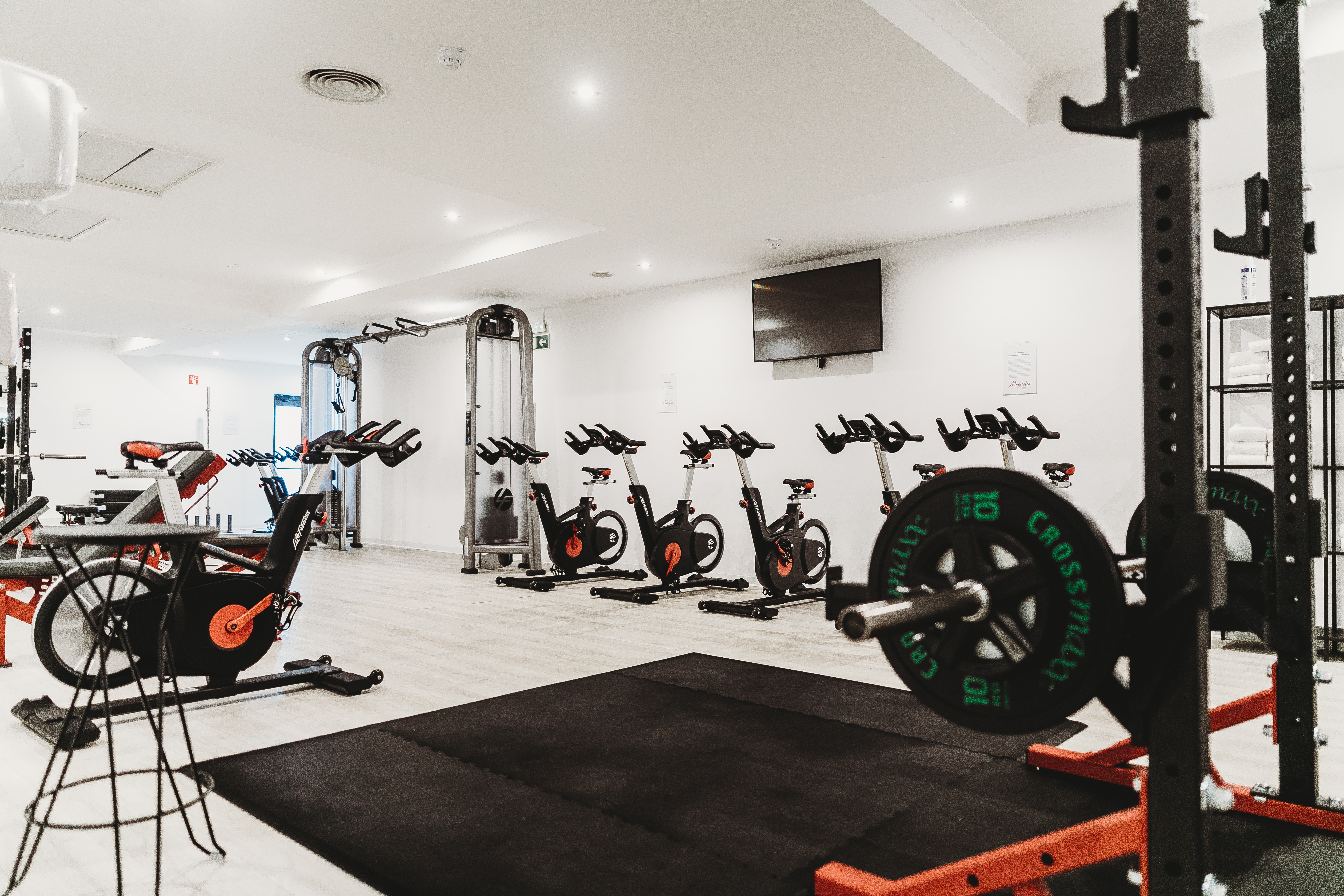
A 2,500–3,500 sq ft group-training space typically needs:
- 6–10 squat racks (or rigs), olympic bars, bumper sets
- 4–6 rowers and/or assault bikes
- Dumbbells 5–80 lb, kettlebells 12–32 kg
- Plyo boxes, GHDs (if your programming uses them), pull-up bars
- Rubber flooring, mats, a sound system that works
- An open floor for warmups and bodyweight work
Buy used where you can — used racks, plates, and bumpers are often 40–60% off retail and indistinguishable from new after a week of use. Splurge on the things that touch hands every class: bars, rowers, and dumbbells.
Plan for growth — leave 20% of floor space empty on day one so you can add stations as memberships grow without a renovation.
Full spec list, supplier notes, and a sample floorplan: Gym Equipment & Floorplan: A Practical Guide.
Step 7: Brand and Price the Offer
Branding, in a gym context, is mostly two things: a name people remember and a vibe people recognize the moment they walk in. Spend money on a designer for your logo and your first website — DIY brand work is one of the few places you can't fake it. But don't agonize over the name for six months: pick something pronounceable, locally meaningful, and not already taken on Instagram.
The brand basics — naming, logo, color, voice, on-the-wall execution: How to Brand (or Rebrand) Your Gym.
Pricing is where most new gyms leave the most money on the table. The two mistakes:
- Anchoring to the cheapest gym in town. (You're not competing on price. You're competing on outcome.)
- Building a 5-tier price grid that confuses everyone. Two or three tiers, max.
A defensible pricing structure for a typical group-training gym:
- Unlimited: $189–$229/month. Your hero offer.
- Two-class-per-week: $139–$169/month. For people who can't commit to four times.
- Drop-in: $25–$35. Mostly for travelers and tourists.
Add a no-commitment month with auto-renewal rather than locking people into 12-month contracts. Modern members hate that.
Pricing math + a discount-strategy guide: How to Price Gym Memberships.

Step 8: Pre-Sell With a Founders Club
This is the single highest-leverage thing you do before opening. A Founders Club is a limited-membership offer (typically 30–50 spots) sold at a small discount in exchange for:
- Paying upfront or starting their billing 60–90 days before doors open.
- A locked-in rate "for as long as they're a member."
- A founders-only tee, hat, or perk that makes them feel like part of the origin story.
A successful Founders Club does three things at once: (1) generates real cash flow before you open, (2) gives you 30–50 evangelists who will fill your classes and bring friends in months one through three, and (3) validates that your offer actually sells before you've spent another dime on marketing.
The exact playbook — sequencing, pricing, scripts: Pre-Sale Playbook: Build a Founders Club Before You Open.
Step 9: Launch — Marketing, Sales, and Operations
Six weeks before opening, the work shifts from building to filling.
Marketing in the launch window is mostly local and direct:
- A simple, fast website with one job: capture leads.
- A Google Business Profile, fully filled out, with photos.
- An Instagram and (if your audience is there) TikTok presence — don't try to do every platform.
- Local partnerships: coffee shops, juice bars, run clubs, physical therapists, chiropractors. Cross-promotion costs $0 and converts well.
- Paid social if your budget allows — $500–$1,500/month is plenty in the first 90 days.
The full launch marketing plan, plus what to keep doing past month three: The Gym Marketing Plan: Website, SEO, and Lead Gen and Gym Social Media Marketing Playbook.
Sales is the unsexy skill that determines whether your gym makes it. You need a simple, repeatable process: lead → free intro → consult → membership. Every step has scripts, and you should practice them out loud before a single lead walks in.
Sales scripts and a 5-step intro process that actually closes: How to Sell Gym Memberships (Without Being Slimy).
Operations on day one means three things: clean check-ins, clean payments, and clean follow-ups. The right gym management software handles all three out of the box. (We're biased — that's literally what PushPress does.) Don't build your ops on a spreadsheet and a payment processor; you'll regret it by month two.
How to set up the operational backbone so your day-one launch doesn't melt down: Gym Operations & Automations.
The 5 Mistakes That Kill New Gyms
After 10+ years of watching gyms launch — including the ones that didn't make it — five mistakes show up over and over.
- Underestimating the cash gap. Founders model "we'll be breakeven in month four" then run out of money in month five because they didn't account for the lease deposit, the marketing spend that didn't convert, or the unexpected HVAC repair. Hold 6 months of fixed costs in cash. Always.
- Trying to be everything to everyone. A gym that does CrossFit, yoga, kids classes, personal training, and pilates is a gym whose members can't describe what it is. Pick a primary model and become known for it. You can add programs after year one.
- Skipping the legal and insurance work. Cheap waivers, no LLC, no professional liability — you're one slipped-disc lawsuit from losing the business and your house. Spend the $2,000–$3,000 it takes to do this right.
- Hiring too fast. Coaches are your single biggest line item after rent. Don't hire a full coaching team until your member count justifies it. Coach more classes yourself in the first six months than you think you should. (More on hiring and keeping great coaches.)
- Ignoring retention. New owners obsess over getting members in the door. The ones who survive obsess over keeping them. A 3% monthly churn rate is the difference between growing and stagnating — and most new gyms run 5–8% without realizing it.
Member retention starts the day someone signs up: Member Experience & Community: Retention Done Right.
Don't Do It Alone. Find a Mentor.
This is the cheapest, fastest skill upgrade available to a new gym owner: find someone who's done it and ask them questions. A good mentor will save you six figures of mistakes by telling you "no, don't do that, here's what I did instead." You'll find them in three places:
- Local gym owners in non-competing markets (or non-competing models). Many will mentor for free if you bring something to the table, like a beer, a workout, a willingness to listen.
- Industry communities — the CrossFit Affiliate Owners Facebook group, Two-Brain Business, Active Life, PushPress's own owner community.
- Paid coaches and masterminds. $200–$500/month for a structured business mentor is the highest-ROI line item in your P&L.
You don't need to figure this out alone. Most gym owners are remarkably generous with what they've learned, because most of them remember being where you are now.

Hire and Keep Great Coaches
Your coaches are your product. Members come for the workout but they stay for the coach who knows their kid's name. A bad coach in your first six months will quietly cost you 10 members before you notice. A great coach will fill classes, sell memberships at the desk, and become a co-owner of the culture.
Hire for character first, certifications second, and ego never. Pay above market — the difference between a $30/hr coach and a $45/hr coach is much, much more than $15 of value to your gym.
Hiring criteria, a sample interview process, and the comp structure that works: How to Hire (and Keep) Great Gym Coaches.
After Launch: What Comes Next
Once you've made it past the first 90 days, the work shifts from "open the gym" to "build the business." Four areas matter most:
- Operations & automations — getting hours back so you can lead instead of admin.
- The metrics that actually matter — MRR, ARM, churn, LTV, NPS. Track five, not fifty.
- Revenue beyond memberships — retail, semi-private, partnerships, events.
- Member experience and community — the moat that compounds.
This is where good gyms become great ones — and where great ones become businesses you'd actually want to sell or scale.
Frequently Asked Questions
How much does it cost to start a gym in the US? Most independent gym launches cost $50,000–$250,000. Small-format gyms (CrossFit, strength studios, boutique fitness) typically land in the $80,000–$150,000 range. The biggest cost drivers are tenant build-out, equipment, and 6 months of working capital reserves. See How Much Does It Cost to Start a Gym? for the full line-by-line breakdown.
Can I open a gym with no money? Realistically, no — but you can open one with very little of your own money. SBA loans, equipment financing, Founders Club pre-sales, and bringing on a financial partner are all common paths. Plan to have at least $20,000–$30,000 of your own skin in the game; lenders and partners both want to see it.
How long does it take to open a gym? Six to twelve months from decision to opening day is realistic. Three months is possible if you have a turn-key second-generation space and existing capital. Anything under three months almost always means corners are getting cut on the legal, insurance, or build-out side.
How much space do I need? Group-training gyms typically run 2,500–5,000 sq ft. Boutique studios (yoga, pilates, cycle) usually need 1,500–3,000 sq ft. Big-box and full-service health clubs are 8,000+ sq ft. As a rough rule, plan 50–80 sq ft per concurrent member for group fitness. More on layout in Gym Equipment & Floorplan.
Do I need certifications to open a gym? You don't need any specific cert to own a gym, but you (and any coach who runs sessions) should hold a relevant certification — NSCA, ACSM, NASM, CrossFit L1, etc. Insurance underwriters often require this anyway, and members will ask.
How do I start a CrossFit gym specifically? Same playbook as above, with three additions: pay the CrossFit affiliate fee, decide on your programming source (write your own vs. licensing programming from Mayhem, CompTrain, Linchpin, etc.), and weight your hiring more heavily toward L1+ certified coaches with movement-coaching experience. Member acquisition leans more on the existing CrossFit community than on broad-funnel marketing. Start with market sizing and equipment.
What's the most important software for a new gym? A gym management platform that handles check-ins, billing, scheduling, and member communication in one place. Trying to stitch together Mindbody, Stripe, Mailchimp, and a paper signup sheet on day one is how new owners burn out by month three. (Yes, this is what we build — but the principle holds even if you don't use PushPress.)
What metrics should I track in year one? Five: monthly recurring revenue (MRR), average revenue per member (ARPM), monthly churn rate, lead-to-member conversion rate, and net promoter score (NPS). If those five are healthy, the rest takes care of itself. Here's how to track them.
Ready to Start?
Opening a gym is hard, but it's not mysterious. The owners who make it aren't smarter or luckier than the ones who don't — they're just better prepared, better capitalized, and better at asking for help. Start with Step 1 above. Move one chapter at a time. And when you're ready to run the gym instead of the spreadsheet, PushPress is built for the way independent gym owners actually work.
Resources for Gym Owners
Playbooks, checklists and on-demand webinars — every one built from an interview with an owner who runs the system.
Ready to scale your fitness business?
Try our hassle-free gym management software loved by thousand of successful gym owners.
PushPress is the reason my gym became profitable.
What to Do When a Gym Member Tells You They Have Cancer
A cancer rehab specialist's 3-step plan: what to say, when to refer out, and how to keep them training.

Putting in the Reps: What Changed at PushPress in Q3
280+ fixes and improvements across booking, check-in, and billing, plus what we're focused on next.

Glofox Pricing in 2026: What $99 a Month Actually Gets You
$99 a month gets you a gym that can't take waivers, sell a shirt or collect a lead from its website.
Follow along and build a better gym with us
Get actionable strategies and ideas to help you grow your gym and manage it successfully, in your inbox every week!