Gym Equipment & Floorplan: A Practical Guide

Published
· Updated
TL;DR
If you're opening a 2,500–3,500 sq ft group-training gym and you only read the next 60 seconds:
- 6–8 squat racks or a single rig, with pull-up bars built in
- 8–10 olympic bars (men's and women's mix) plus 6–8 sets of bumper plates
- 4 rowers (Concept2) and 2 assault bikes (Rogue Echo or AssaultBike)
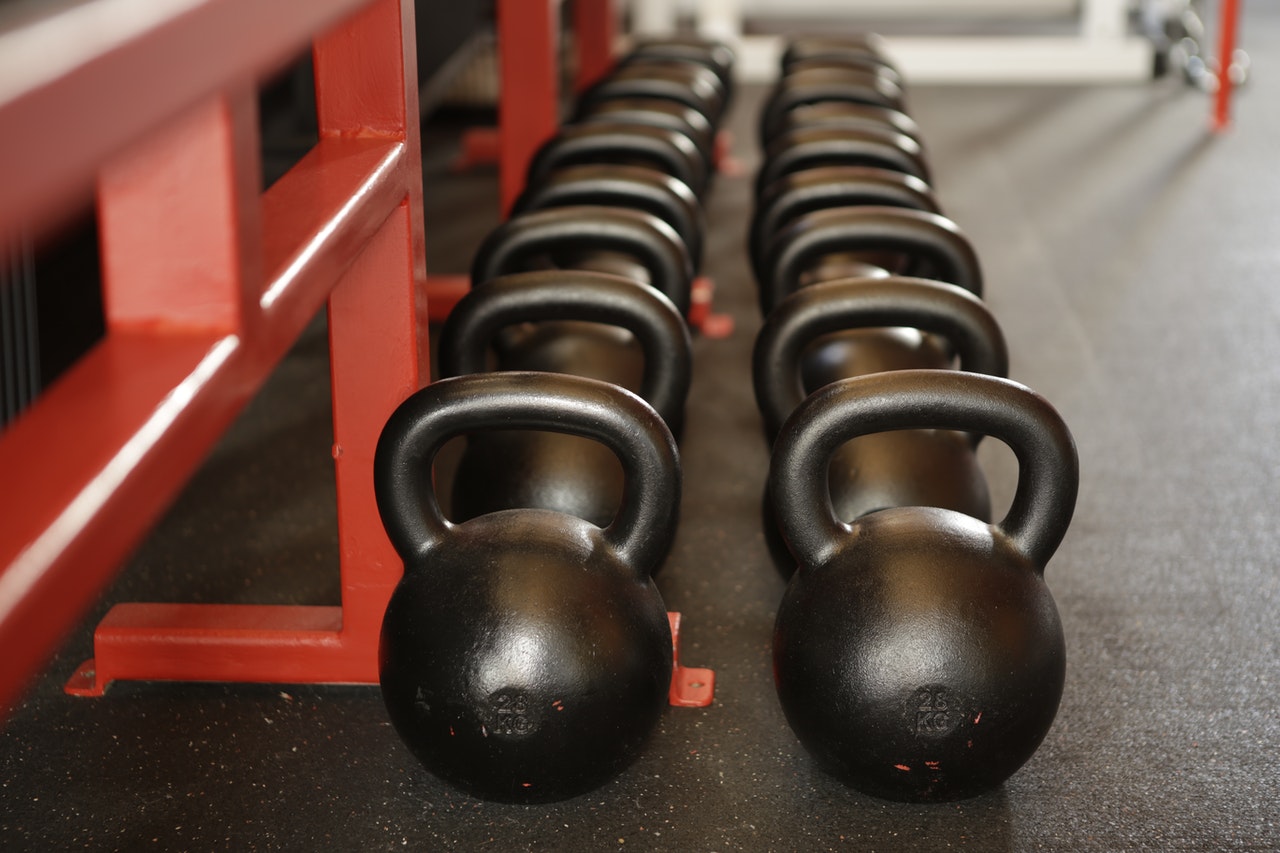
- Dumbbells 5–80 lb in 5 lb increments and kettlebells 12–32 kg in 4 kg increments
- 2–4 plyo boxes, jump ropes, slam balls, wall balls, abmats
- Rubber flooring (3/4" stall mat or modular tiles), a sound system, and a clock
- Open warmup space — at least 400 sq ft, no equipment allowed
- Total equipment spend: $25,000–$45,000 if you mix new and used
That's it. No cable machine, no leg press, no Pelotons, no turf-with-sled lane. You can add those once you have 100 members paying $200/month.
Equipment is the line item where new gym owners overspend the most and plan the worst. We've watched founders drop $80,000 on a Pinterest-perfect build-out before they had a single member, and we've watched others open with mismatched bars and a single rower because they were trying to be heroes about their burn rate. Both are mistakes. The first runs you out of cash. The second runs members out the door on their first visit.
The truth lives in the middle, and it's mostly math. Equipment serves your programming model, not the other way around. Floorplan serves your coaches' sightlines and your members' flow, not your Instagram grid. If you can keep those two principles in mind while you spec the space, you'll spend less, open faster, and grow without having to renovate twice.
This is the chapter we send to founders in Phase 2 of the playbook — the build-and-set-up phase, after the lease is signed and before the doors open. The numbers below are pulled from a decade of working with independent gym owners. Adjust them for your market, but don't ignore them.
Sizing the Space — Square Footage by Gym Type
Before you spec a single barbell, lock in how much space you actually need. The rule that matters: square feet per concurrent member at peak class size. Not total membership — peak. A gym with 200 members might only have 16 in the room at 6 a.m.
Rough industry math:
- Group training (CrossFit, strength & conditioning, bootcamp): 60–80 sq ft per concurrent member. A 16-person class needs 1,000–1,300 sq ft of working floor, plus warmup space, storage, bathrooms, and an office. Total footprint usually lands at 2,500–3,500 sq ft.
- Boutique fitness (yoga, pilates, cycle, barre): 25–40 sq ft per concurrent member, but you need separate studios, lockers, and often showers. Total footprint: 1,500–2,500 sq ft.
- Personal training studio (1-on-1 or 2-on-1): 150–250 sq ft per active station. Two trainers running simultaneously need 600–1,000 sq ft total.
- Semi-private / small group strength: 80–100 sq ft per member. A 6-person semi-private session at 100 sq ft is 600 sq ft of working floor.
A 16-person CrossFit class at 70 sq ft per member needs 1,120 sq ft. Add a 400 sq ft warmup zone, 300 sq ft for storage and bathrooms, and 200 sq ft for an office and check-in. You're at roughly 2,000 sq ft minimum — and that's tight. 2,800–3,200 sq ft is the sweet spot for a gym that wants to grow to 150–200 members without renovating.
If you're still negotiating space, get the location math right before you sign anything: see How to Pick the Perfect Gym Location.
The Day-One Equipment List (With Dollar Ranges)
Three lists below, by gym type. All ranges assume a healthy mix of new and used. If you go all new, add 30–50%. If you go all used and patient, you can shave another 20–30% off.
For a 2,500–3,500 sq ft Group-Training Gym
Opening a CrossFit box specifically? This table is the budget-and-floorplan view; for the full, item-by-item shopping checklist — gymnastics gear, conditioning machines, the CrossFit signatures, and the nice-to-have extras — see the CrossFit Gym Equipment List.
For a 1,500–2,500 sq ft Boutique Studio (Yoga / Pilates / Cycle)
The big variable here is whether you need specialty equipment (reformers, bikes) or just a clean floor and lighting.
Boutique studios are where the build-out (mirrors, lighting, finishes) often costs as much as the equipment. Negotiate for it as part of your tenant improvement allowance — see How to Negotiate a Gym Lease for the clauses to push on.
For a Small Personal Training Studio
A two-trainer PT studio in 800–1,200 sq ft can open for $8,000–$15,000:
PT studios are the highest-margin format per square foot, and the cheapest to launch. The catch: you're selling time, not memberships, so revenue is capped by trainer hours.
What to Buy New vs Used
This is the single biggest cost lever you have. Used equipment from a closing gym, a Facebook Marketplace strength athlete, or a wholesaler like Again Faster's used inventory can be 40–60% off retail and indistinguishable after a month of chalk dust.
Buy new (or near-new):
- Olympic bars. A bent or worn bar is dangerous and feels terrible. New men's bars from Rogue, Eleiko, or American Barbell run $250–$700. Buy two or three good ones, not eight cheap ones.
- Dumbbells. Used rubber dumbbells often have torn coatings and rusted handles. Members notice immediately. Buy new or barely-used urethane.
- Concept2 rowers. They almost never come up cheap because they last forever. New is $1,000 each; that's the price.
- Assault bikes. Same logic. The fan and chain are wear items, and a beat-up bike sounds awful.
Buy used (and save 40–60%):
- Squat racks and rigs. Steel doesn't wear out. A used Rogue rig is the same rig.
- Bumper plates. Bumpers chip and discolor but they don't lose function. Used 45s for $1/lb is the going rate.
- Plyo boxes, GHD machines, reverse hypers. Niche pieces that closing gyms unload constantly.
- Flooring. Used 3/4" stall mats are everywhere on Marketplace.
- Storage racks, benches, dip bars. All durable, all cheap used.
Don't buy at all on day one:
Cable stacks, leg press machines, hack squats, smith machines, treadmills (unless you're a hybrid commercial gym), and anything labeled "functional trainer." If your programming requires it, buy it. If it's there because the showroom looked nice, skip it. You can always add later.
Floorplan Principles
Six rules. Break them only on purpose.
1. Open warmup zone at the front. Members walk in, drop their bags, and need 400+ sq ft to move freely without hitting equipment. This is also where coaches gather the class to brief. Keep it open. No racks, no toys, just floor.
2. Lifting zone along a long wall. Racks or rig against the wall — never floating in the middle. Bumpers stay near the rig. This keeps barbells away from foot traffic and concentrates the loudest part of the class in one spot.
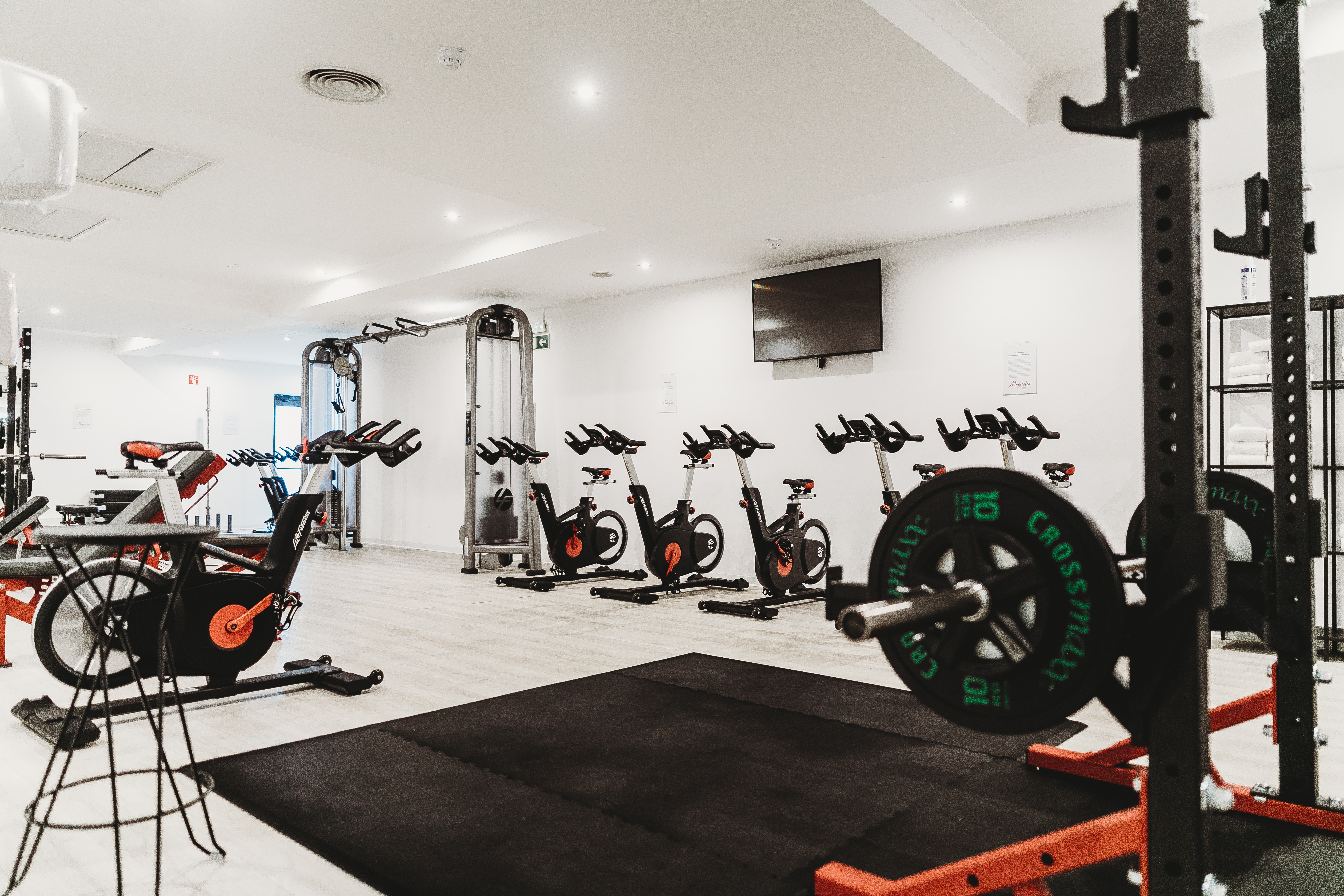
3. Conditioning zone with breathing room. Rowers and bikes need 4–6 ft behind them so handles don't hit walls and members don't crash into each other. Put them on the opposite side from the lifting zone — different sound, different vibe.
4. Storage hidden but accessible. Wall balls, abmats, jump ropes, foam rollers — these accumulate and they look like clutter. Build a cubby wall or a tucked-away shelf. The best gyms look uncluttered because every piece has a home.
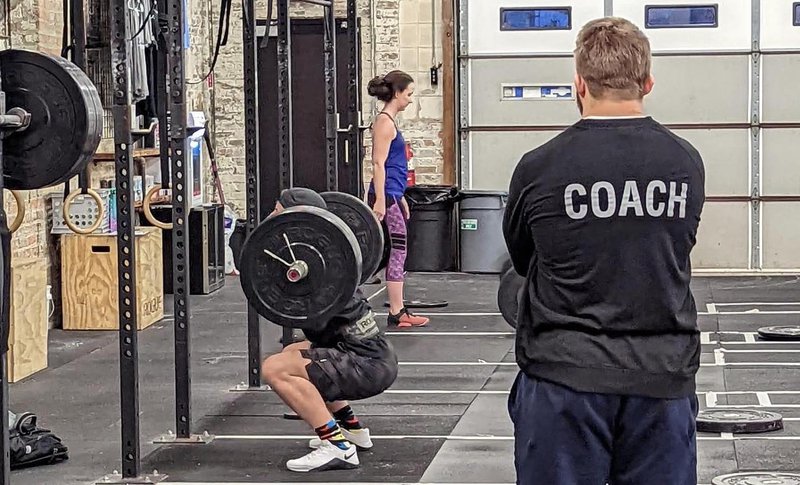
5. Sightlines for coaches. A coach should be able to stand in one spot and see every member of a 16-person class. That means no equipment islands taller than 4 feet in the middle of the floor. If you can't see the whole class, you can't coach the whole class.
6. Leave 20% empty. This is the rule new owners ignore most often. The space that's empty on day one is what lets you add 4 more racks at month 9, or convert a corner to semi-private at month 18. If you fill every square foot now, you renovate later — and renovation is 5x more expensive than just leaving the floor open.
A simple test: stand at the front door and walk through what a member's first 90 seconds look like. Do they know where to go? Can they see the coach? Is the floor obvious, or do they have to ask? If you can't draw a clean path from door to warmup to whiteboard, redo the layout before you buy a single piece of flooring.
Equipment Timeline — What to Add at 50, 100, and 150 Members
You don't buy your year-three equipment in year one. You stage it. Here's the rough cadence we see in healthy gyms.
0–50 members (months 0–6): Run lean. The day-one list above is enough. Resist every urge to buy "one more rower" or "a turf strip" — your first job is keeping members, not impressing them with gear they don't use. Track what you actually need by watching classes for two weeks. If 3 members are sharing a bar at 6 a.m., you have a real signal. If a coach asks for a reverse hyper because they read about it, you don't.
50–100 members (months 6–12): Add capacity, not novelty. This usually means: 2 more rowers, 1–2 more racks, another set of bumpers, more 50–80 lb dumbbells (everyone wants the heavy ones). Budget $5,000–$10,000.
This is also when retail starts mattering: a small apparel display, a fridge for drinks. See Gym Revenue Growth Strategies for what to add and when.
100–150 members (year 1.5+): Now you can think about specialty: a sled and turf lane, a reverse hyper, a couple of specialty bars (safety squat, swiss bar), nicer recovery equipment. This is also when most gyms add a semi-private offering, which often needs 1–2 dedicated stations with cables or specialty pieces. Budget $8,000–$20,000.
By the time you're tracking these milestones, you should be tracking the rest of the business too. The five metrics that actually predict equipment ROI: Gym Metrics to Track.
Common Equipment Mistakes
Overbuying boutique pieces day one. Saunas, cold plunges, infrared rooms, custom-painted barbells — all great, all unnecessary on day one. Members stay because of the coach and the community, not the cold plunge. Add it in year two when cash flow can absorb it.
Underpowering electrical. This one is brutal and invisible. A standard 200-amp commercial panel will not run 25 spin bikes, an HVAC system sized for sweating bodies, music, and lighting all at once. Have an electrician walk the space before you sign the lease. If you need a service upgrade, it's $5,000–$15,000 and 4–8 weeks. Build that into your tenant improvement allowance negotiation.
No storage plan. Equipment piles up. Foam rollers, lacrosse balls, bands, jump ropes, mats — within a year you'll have 200 small items. If you don't have a wall of cubbies or a closet, your gym will look messy regardless of how nice the equipment is. Plan storage square footage on day one. 5–8% of total square footage is a reasonable budget.
Buying the wrong flooring for the wrong zone. Horse stall mats are great under racks. They're awful in a yoga area. Specialty flooring (sprung floor, marley, foam) is non-negotiable for some modalities. Don't buy 3,000 sq ft of one flooring and assume it works everywhere.
Skipping the sound system. A bad speaker setup kills class energy. You don't need $5,000 of audio, but a $400 speaker that fills the room beats a $80 speaker that doesn't. Members rarely compliment good sound. They always notice bad sound.
FAQ
How much does gym equipment cost to outfit a small gym? For a 2,500–3,500 sq ft group-training gym, expect $25,000–$45,000 with a healthy mix of new and used. All-new pushes that to $50,000–$70,000. Patient used buying can land at $18,000–$25,000 if you have time and a pickup truck.
What equipment do I need to start a gym? The minimum viable list for group training: 6 racks or a rig, 8 bars, 6 sets of bumpers, dumbbells 5–80 lb, kettlebells 12–32 kg, 4 rowers, 2 assault bikes, plyo boxes, wall balls, jump ropes, abmats, and rubber flooring. Total around $28,000 mixed new and used.
How big should a gym be? Group training: 2,500–3,500 sq ft for 100–200 members. Boutique fitness: 1,500–2,500 sq ft. PT studio: 800–1,200 sq ft. The math that actually matters is square feet per concurrent member at peak class — 60–80 for group training, 25–40 for boutique.
Should I buy new or used gym equipment? Mix both. Buy new: bars, dumbbells, rowers, assault bikes — the things hands touch every class. Buy used: racks, bumpers, plyo boxes, GHDs, flooring — durable steel and rubber doesn't wear out.
How much floor space should I leave empty when opening? Around 20%. Empty floor space is your single biggest hedge against renovation cost in years 2–3. It also lets you run larger classes, add semi-private stations, or stage retail without rebuilding.
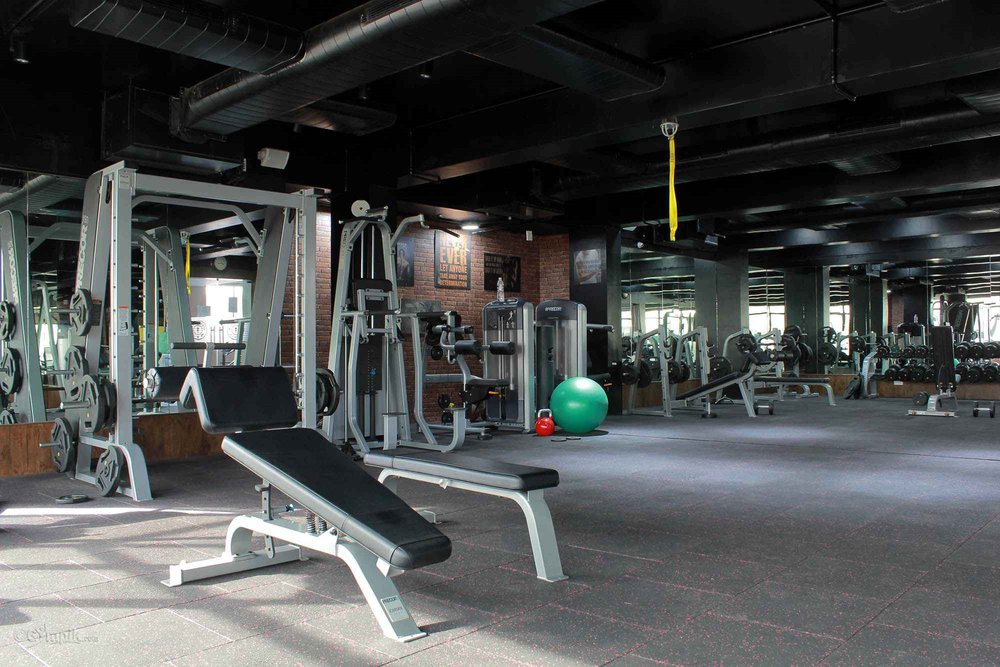
What's the most overrated piece of equipment for a new gym? Cable stacks and functional trainers. They look impressive in showrooms, members rarely program around them in group classes, and they take up 80–120 sq ft of premium floor. Add later if your programming demands it.
Do I need a separate warmup area? Yes. 400+ sq ft of unencumbered floor at the front of the gym is non-negotiable for group training. Members need a place to land, foam roll, and gather before class. Skipping this is the most common floorplan mistake we see.
Open With Less, Grow With Intention
Your gym doesn't need to look like the showroom on day one. It needs to support good coaching, good programming, and a clear member flow. Spend the smallest amount that lets you deliver an excellent class to 16 people, leave 20% of the floor empty, and use the cash you saved to fund the runway that gets you to month 12.
When you have 100 members paying $200, the rower budget gets a lot easier. Until then, keep the list tight and the layout clean.
Working through the rest of the launch? Head back to the full Start a Gym playbook — equipment is one of nine steps, and the others matter just as much.
Resources for Gym Owners
Playbooks, checklists and on-demand webinars — every one built from an interview with an owner who runs the system.
Ready to scale your fitness business?
Try our hassle-free gym management software loved by thousand of successful gym owners.
PushPress is the reason my gym became profitable.
What to Do When a Gym Member Tells You They Have Cancer
A cancer rehab specialist's 3-step plan: what to say, when to refer out, and how to keep them training.

Putting in the Reps: What Changed at PushPress in Q3
280+ fixes and improvements across booking, check-in, and billing, plus what we're focused on next.
Glofox Pricing in 2026: What $99 a Month Actually Gets You
$99 a month gets you a gym that can't take waivers, sell a shirt or collect a lead from its website.
Follow along and build a better gym with us
Get actionable strategies and ideas to help you grow your gym and manage it successfully, in your inbox every week!