The 3 Gym Events Every Owner Should Run (And Why They Work)

Published
TL;DR
Three CrossFit owners shared the events that actually fill their gyms year after year:
- Member party (Traie Miles, Rushmore CrossFit): 90% of active members show up
- Fundraiser (Nick Johnson, CrossFit Liminal): ~$9,000 raised, 50/50 member-to-community split
- Bring-a-friend night (Aimee Moller, Swift River CrossFit): 40-60 attendees, 3-10 conversions per event
Want the shared framework that powers all three? You can grab it here grab it here.
Most gym owners have run an event that ended with four people in the door, a tired team, and the quiet decision to never do that again.
Events get a bad rap because they're hard to do well. They drain energy. The ROI is unclear. And after one or two flops, most owners write them off as "not worth it."
But when they're run right, events are one of the most underused tools you have for retention, referrals, and building the kind of community your members actually talk about. They're how a $159/month membership becomes a $159/month membership your members would never cancel.
We pulled three CrossFit owners onto a webinar to walk through the events they actually run year after year. Different formats. Different metrics. Same underlying framework.
Here's how they do it, and how you can borrow from any of the three.
The 3 event archetypes
1. The annual member party
Run by: Traie Miles, Rushmore CrossFit
Goal: Retention. Reward your members and remind them why they joined your gym.
Metric: Percentage of active members who attend, plus year-over-year sponsor buy-in.
Why it works: Members who feel connected to your gym beyond their workouts renew longer and refer more naturally. A member party is the cheapest, highest-signal way to reinforce that connection once a year.
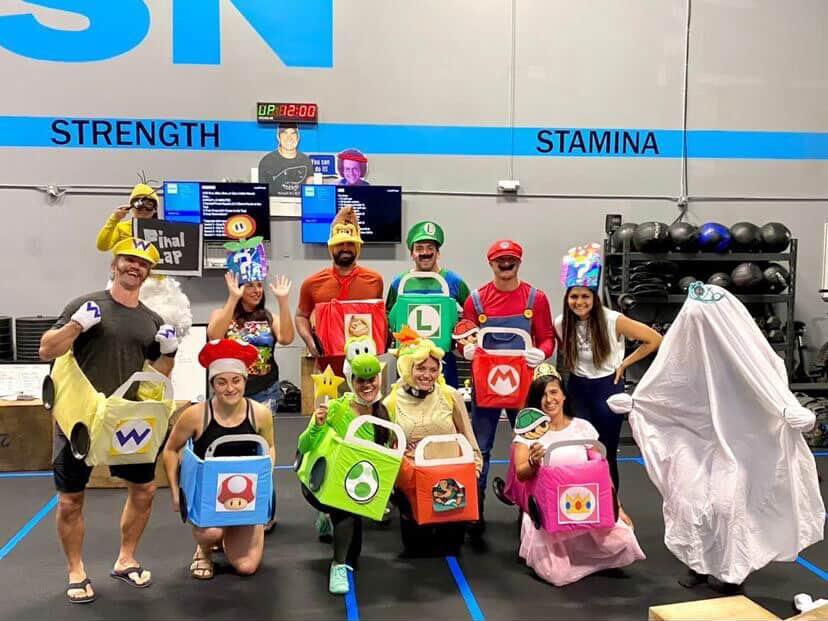
Traie's annual member party is exactly what it sounds like. Once a year, the gym puts on a real party (open bar, DJ, photo booth, sponsors) and invites every member.
What makes it work isn't the format. It's the discipline around it. Traie books the date six months in advance and works around spring break, prom, Easter, and the local school calendar. She lines up sponsors (mostly members who happen to own service-based businesses), hires a DJ to run the floor, and her day-of job is one thing: greet members at the door.
"If I didn't own the gym, I would be an event planner," she said. The natural-talent part of her job is host. The systems part is the calendar and the delegation.
Her turnout proves it works. Once she filters out at-risk members and punch-pass holders, she's pulling 90% of her active membership.
2. The fundraiser
Run by: Nick Johnson, CrossFit Liminal
Goal: Mission-driven community building. Connect your members to something bigger and pull in the surrounding community.
Metric: Total dollars raised, plus a 50/50 split between members and non-member attendees.
Why it works: A cause deepens member commitment, raises your gym's profile locally, and tends to attract sponsors and outside attention a standard gym event won't. The members who show up to raise money for something they care about are also your most loyal.
Nick's gym is in Clarkston, GA, a town that resettles refugees from around the world. Their fundraiser, Ruck for Refugees, started as a CrossFit-style workout and evolved into a community ruck. Members walk through neighborhoods where refugees live with weight on their shoulders, representing the weight refugees carry when they flee home.
"Carry weight for other people who have had to carry more weight than we have," Nick said.
The format change from a workout to a ruck made the event accessible to people who'd never set foot in a CrossFit gym. But the bigger shift was turning a one-day event into a 30-day challenge.
For the month before the ruck, members competed to raise the most money and ruck the most miles. The leaderboard lived on social. Members shared their progress, invited friends, and did most of the marketing work themselves. The day of the ruck became the finale, capped by an adult prom that night, with a limo ride to the prom for the top fundraisers.
"Probably the best day we've had as a gym," Nick said. In 2026 the event raised roughly $9,000, funding free fitness classes for the Afghan refugee community in Clarkston.
3. The bring-a-friend night
Run by: Aimee Moller, Swift River CrossFit
Goal: Referrals and trial. Get current members to expose their friends to your gym in a low-pressure setting.
Metric: Total attendance (40-60 women), percentage of members who brought a friend (90%+), and conversions to membership (3-10 per event).
Why it works: A warm referral who's already had a good time at your gym is more likely to sign up than someone who clicked an ad. Bring-a-friend formats let prospects experience your culture firsthand, without the pressure of a sales conversation.
Aimee runs Wine & WOD, a women-only bring-a-friend event borrowed from Two-Brain Business and adapted to her gym. The format is a team-based workout, free wine and snacks, and a guest seminar at the end. Past seminars have included a women's pelvic floor specialist, a hot yoga instructor, and women's self-defense.
The first time she ran it, "we had 30 ladies and one friend. Because I was not super clear that you're expected to bring a friend with you as your ticket in the door."
Now the expectation is built into everything. Coaches talk about it on the floor every class. The event lives as a workout of the day in her PushPress Screens, so the daily briefing forces every coach to bring it up. Posters with QR codes are up everywhere in the gym, including the bathrooms ("the best place to put posters," in her words, since you have a captive audience).
She also added an incentive. Whoever brings the most friends gets a pair of CrossFit shoes. After the event, every attendee gets a handwritten thank-you card in the mail with two Committed Club stickers and a Black Card carrying a $75 friend referral offer.
She hasn't run the event in two years. She delegated it to her head coach and operations manager. "They're doing better than I ever did."
If you want the systems underneath all three of these events (full timelines, sponsor outreach templates, day-of checklists, and post-event follow-up sequences), grab the free playbook here.
The shared framework
These three events look different on the surface. Underneath, they all run on the same five principles.
1. Pick the metric before you pick the event
If you can't name the number that defines success, you can't tell if the event worked. None of these three owners runs an event without knowing what they're aiming at:
- Nick: dollars raised + member-to-community ratio
- Aimee: total headcount + percentage bringing a friend + conversions
- Traie: percentage of active membership + sponsor buy-in year over year
"I just want to do something fun for my community" is a vibe, not a goal. Give yourself a number.
2. Set the date six months out
Traie checks spring break, prom, Easter, and the local school calendar before committing. The wrong weekend kills attendance no matter how good the event is.
This isn't paranoia. It's the cheapest insurance policy you can buy against a bad turnout.
3. Build a promo runway, not a single push
Aimee's Wine & WOD has a four-week ramp: weekly Facebook messages, daily whiteboard briefings, posters with QR codes, coach conversations on the floor, a private Facebook event with one-click invites. Every channel hits every member.
Nick took it further. His Ruck for Refugees is a 30-day challenge where the event itself is the finale. Members do the promo work for him on social because they're competing on the leaderboard.
The bigger your runway, the less it depends on any single push.
4. Day-of, be the host (not the operator)
The temptation is to do everything yourself. Don't. Delegate the logistics so you can do the one thing nobody else can: connect with the people in the room.
- Traie hires a DJ to run the floor and keep the vibe up
- Nick uses volunteers for the ruck, a committee for the prom, and a photographer
- Aimee handed off the entire event and doesn't even attend anymore
The host job is mostly about first-timers. Your members already know each other. Guests don't. Pair them intentionally during any workout, introduce them by name, and keep staff circulating instead of clustering with members they already know.
If you can't delegate it this year, run it once yourself so you see every part of it. Then build the SOP and hand the next one off.
5. The reward lives in the 7 days after
Everyone runs the event. Almost nobody runs the follow-up. That's where the retention and referral payoff actually shows up.
The first 24 hours are the most important. Post your recap on social while the energy is still hot. Send a thank-you email to every attendee. Pull the sign-in sheet and identify any guest who didn't book a next step, then send them a personalized text. Not a mass blast. Individual messages.
If a guest doesn't respond in 48 hours, pick up the phone. That single call separates the gyms who convert event attendees from the ones who don't.
Shared elements across all three owners:
- Handwritten thank-you cards (members and non-members both)
- Social media post-event push: photos, reels, candid shots, while the FOMO is still hot
- Individual sponsor thank-yous, by phone or personal email, not a mass note
- A real follow-up offer for non-members. Nick gives $100 off the first month, a dollar-for-dollar return on what they donated. Aimee uses a $75 give / $75 get referral, with cash handed out at the whiteboard for FOMO.
And after every event, an after-action review. Traie keeps a running Word doc of things to change next year. Nick debriefs with his board. Aimee updates the playbook. The point isn't to nail it the first time. The point is to be one cycle better every year.
How to start this week
The framework only works if you actually use it. Here are six things to do this week to plan your first (or next) event:
- Find your goal. Name the specific metric you'll measure. "Fun" doesn't count.
- Pick a date. Give yourself at least 6 to 8 weeks for your first one. Check the local calendar.
- Pick the format. Member party, fundraiser, or bring-a-friend. Don't overthink it.
- Identify who owns execution. Even if that's you, name what they own and what you own.
- Set an attendance goal. It doesn't have to be big. It just has to be a number.
- Send one piece of communication this week. An email, a social post, a sponsor outreach note. Plant the seed so you're accountable to it.
Let PushPress handle the logistics
The framework only works if you have the time to host. PushPress takes the repetitive parts off your plate so you can focus on the people in the room.
- Event Booking keeps registration, the attendee list, and member-app communications in one place
- Staff App gives your coaches the event roster before they walk in, with a dedicated chat thread for the day
- PushPress Grow turns every guest registration into automated follow-up the same day, while your gym is still top of mind
- Committed Club gives you a built-in way to recognize the members who keep showing up, on screen and in the app
Get the full playbook
If you want the systems underneath all three of these events (full timelines, sponsor outreach templates, day-of checklists, and post-event follow-up sequences), grab the free playbook here.
Resources for Gym Owners
Playbooks, checklists and on-demand webinars — every one built from an interview with an owner who runs the system.
Ready to scale your fitness business?
Try our hassle-free gym management software loved by thousand of successful gym owners.
PushPress is the reason my gym became profitable.
Glofox Pricing in 2026: What $99 a Month Actually Gets You
Glofox publishes one number: plans starting at $99 a month. Here's what that number covers, what it doesn't, and what PushPress costs in full.
5 Best Software Options for Programming Daily Gym Workouts (2026)
Compare PushPress, Wodify, SugarWOD, btwb, and TrainHeroic for programming daily gym workouts: pricing, affiliate programming, and data integration.
Your Sales Script Has Drifted. Here's How to Retrain Your Team Before January
Nobody abandons the sales process. They lose 5% of it at a time until the close rate drops.
Follow along and build a better gym with us
Get actionable strategies and ideas to help you grow your gym and manage it successfully, in your inbox every week!